DexGO
Dexterous Grasp Transition with Object Relocation
ETH Zurich
- Interactive demo
- Paper · soon
- Code · soon
The whole motion is generated by a single policy, which is trained from scratch without any motion data.
Abstract
Different tasks require an object to be held in different ways. Humans therefore often adjust their grasp while moving an object into place. Motivated by this, we study grasp transition with object relocation: given a target grasp and a desired object world pose, the hand must transition from its initial grasp to the target grasp while relocating the object to the specified pose. This problem is challenging because the goals specify only the final state without intermediate guidance, and their complexity varies widely, from minor in-hand adjustments to grasp type changes coupled with long-distance relocations. In this work, we present DexGO, a reinforcement learning framework that trains a single policy through progressive task composition. Specifically, we introduce a prerequisite graph that organizes four basic capabilities and their increasingly complex combinations, allowing simpler tasks to provide intermediate guidance for learning more complex ones. We further introduce a task-wise annealed kernel reward and a nonlinear encoding of spatial observations to facilitate precise reaching across a wide range of goal distances. Experiments demonstrate that a single policy can achieve diverse target grasps and object world poses across a wide range of task complexities, producing precise and controllable motions.
Problem definition
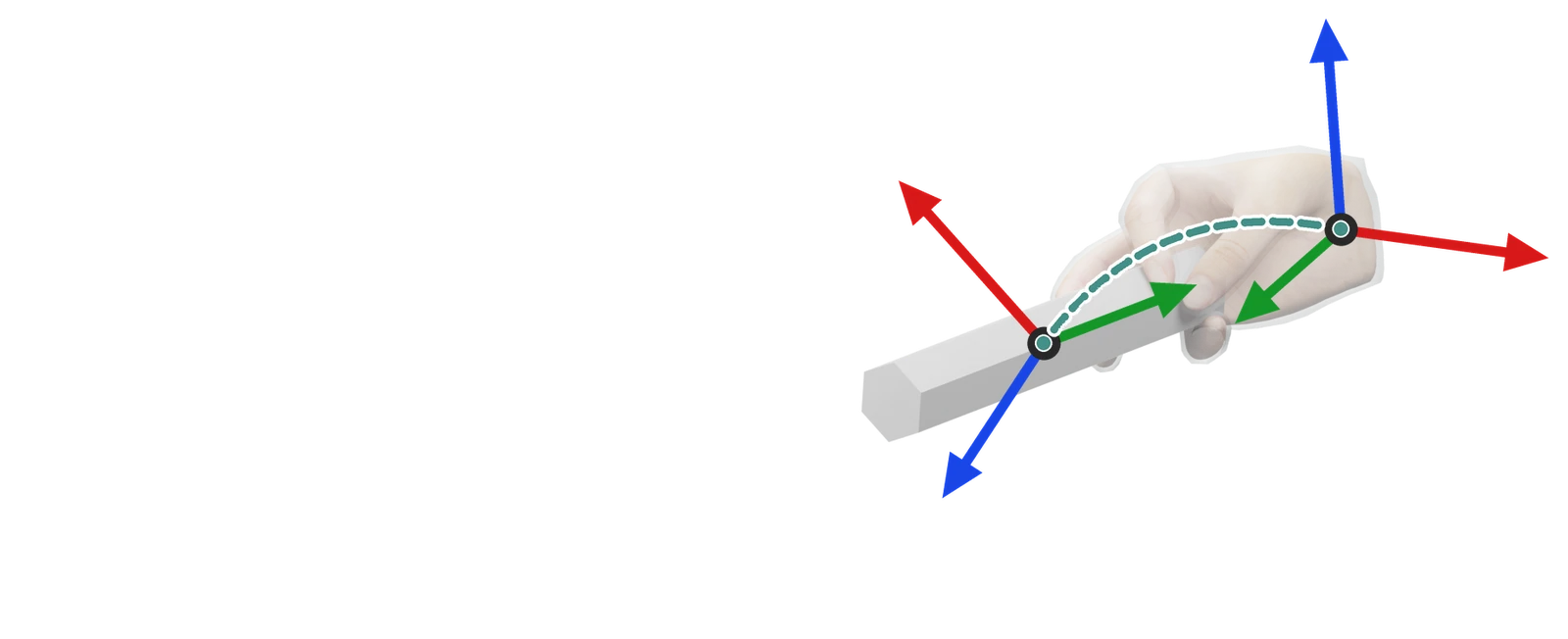
Goal: target grasp + object world pose
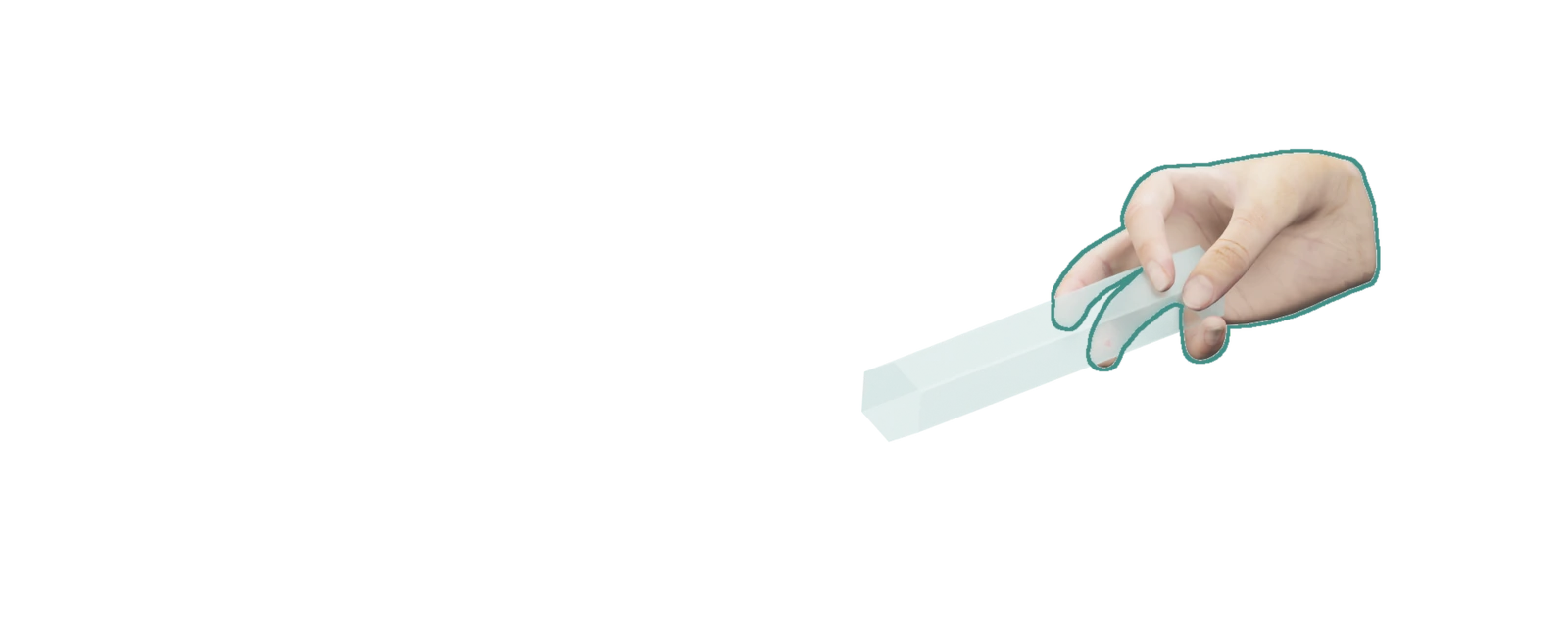
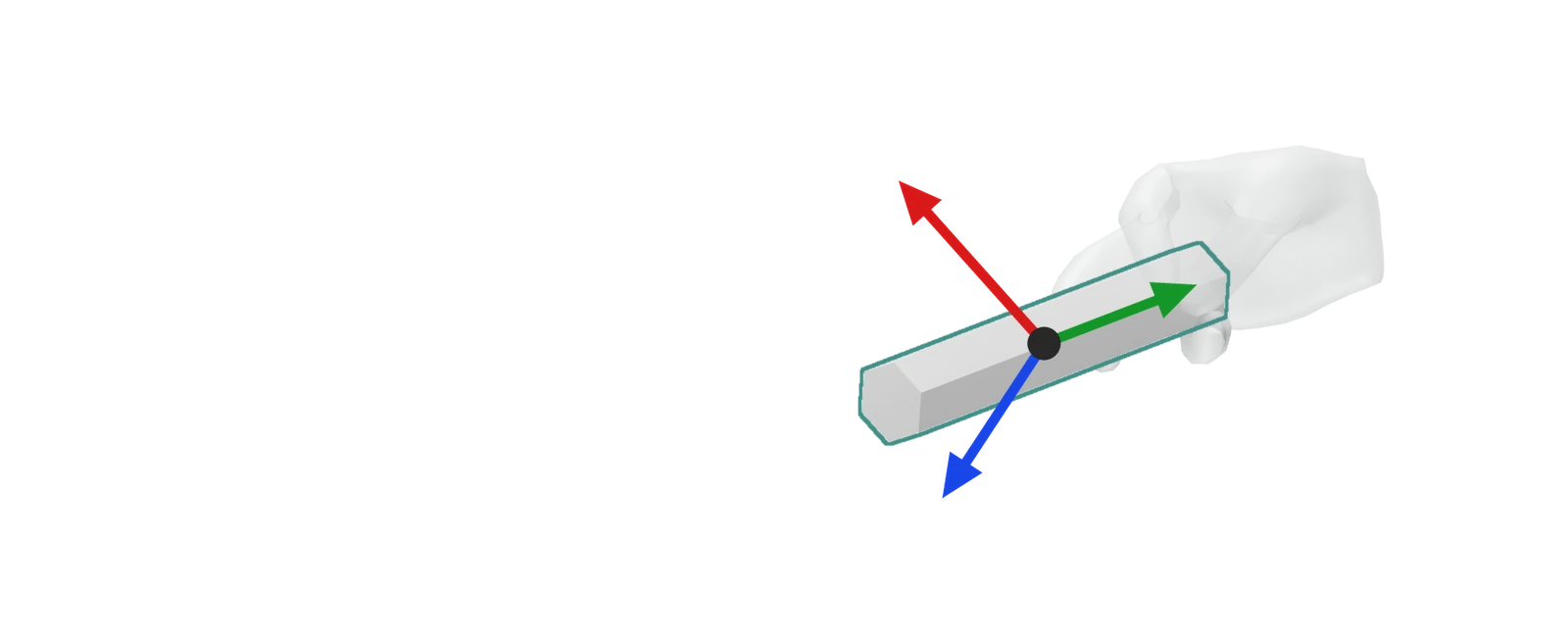
Given only the final goal, the policy should control the hand to reach the target grasp while moving the object to the desired world pose.
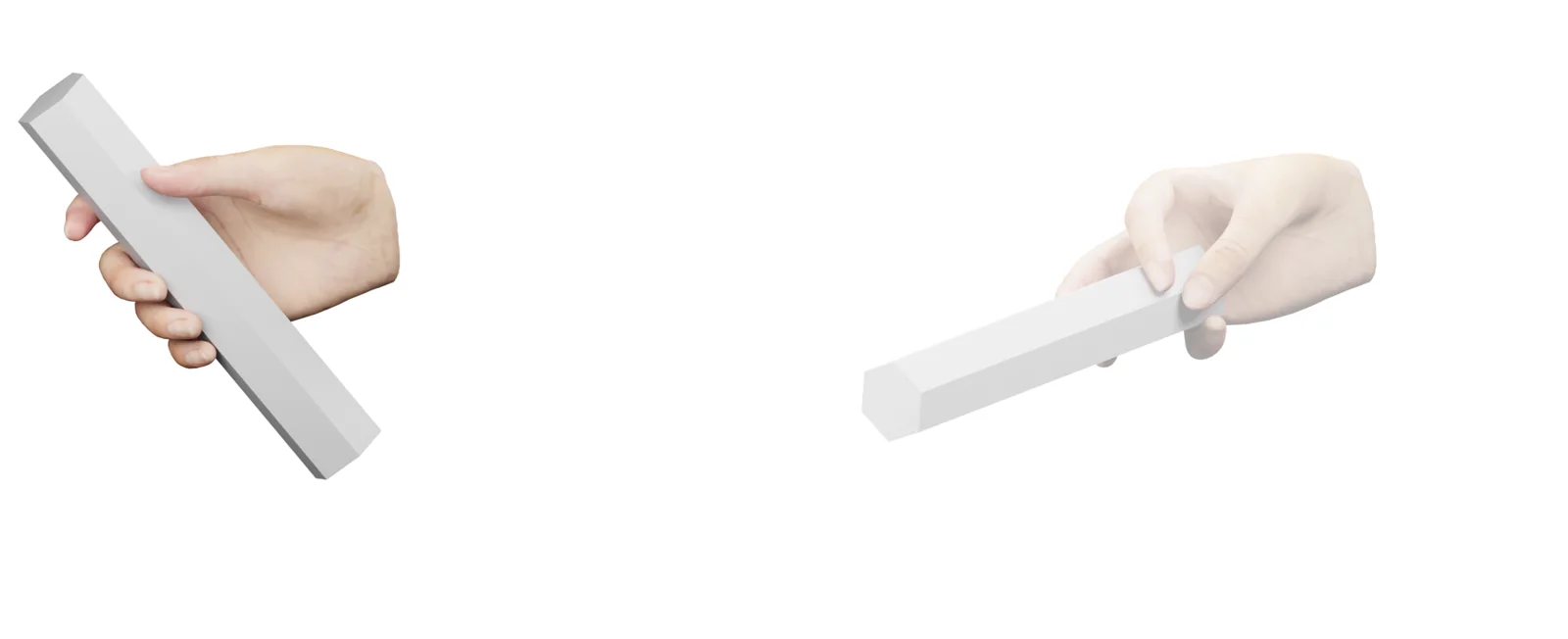
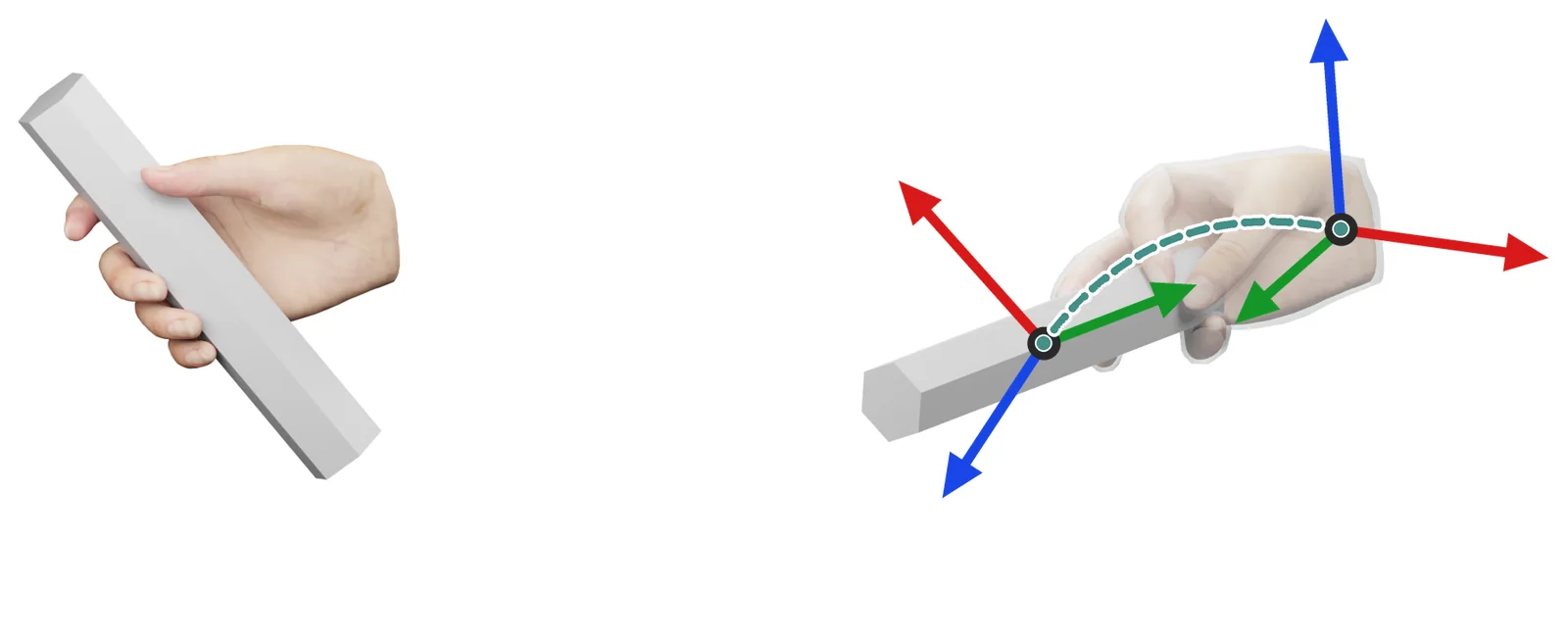
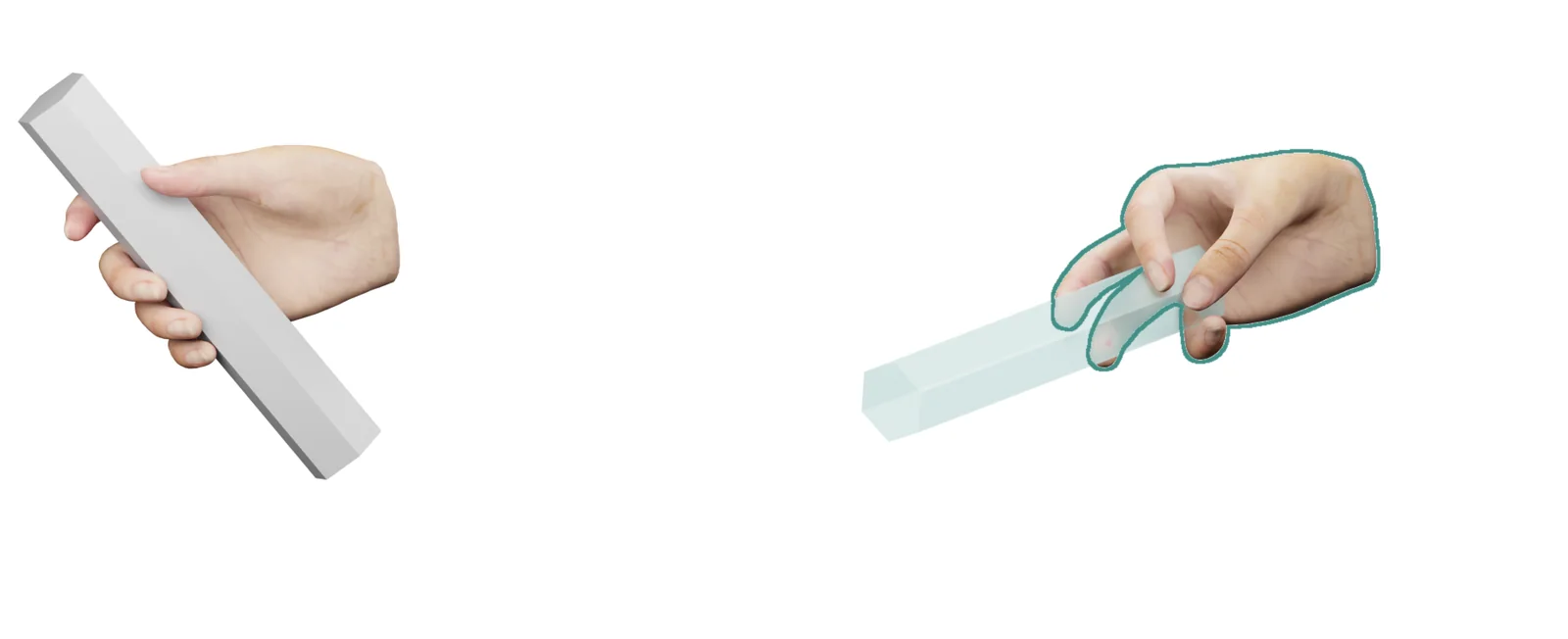
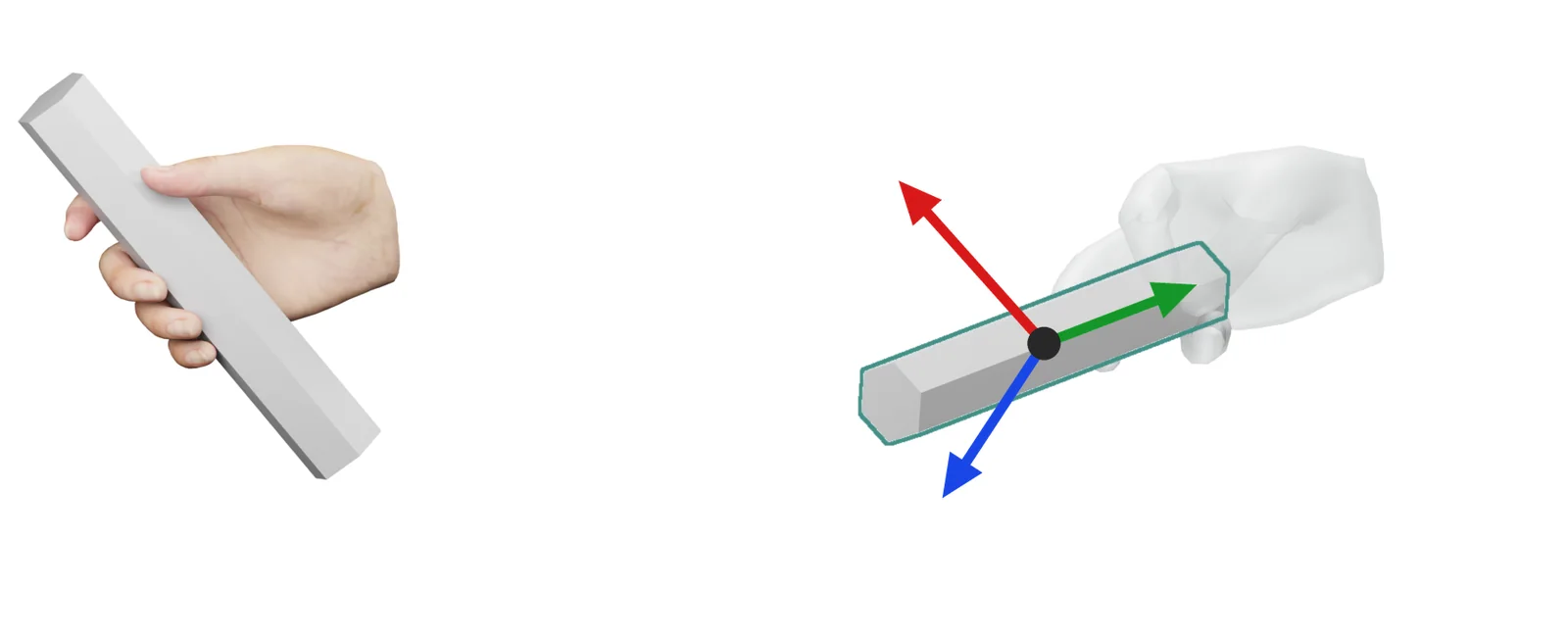
Select a part to highlight it
Target grasp
Desired object pose
Method
Progressive task learning & Precise goal reaching
A prerequisite graph allows a single policy to learn harder tasks by building on simpler ones. A task-wise annealed kernel reward and a nonlinear observation encoding enable precise reaching across a wide range of goal distances.
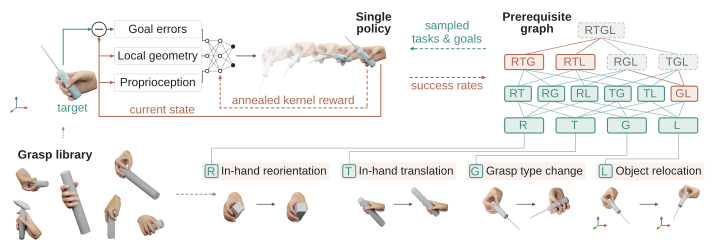
Prerequisite graph
A task is unlocked only when all its prerequisites are learned
Select a task to watch an example
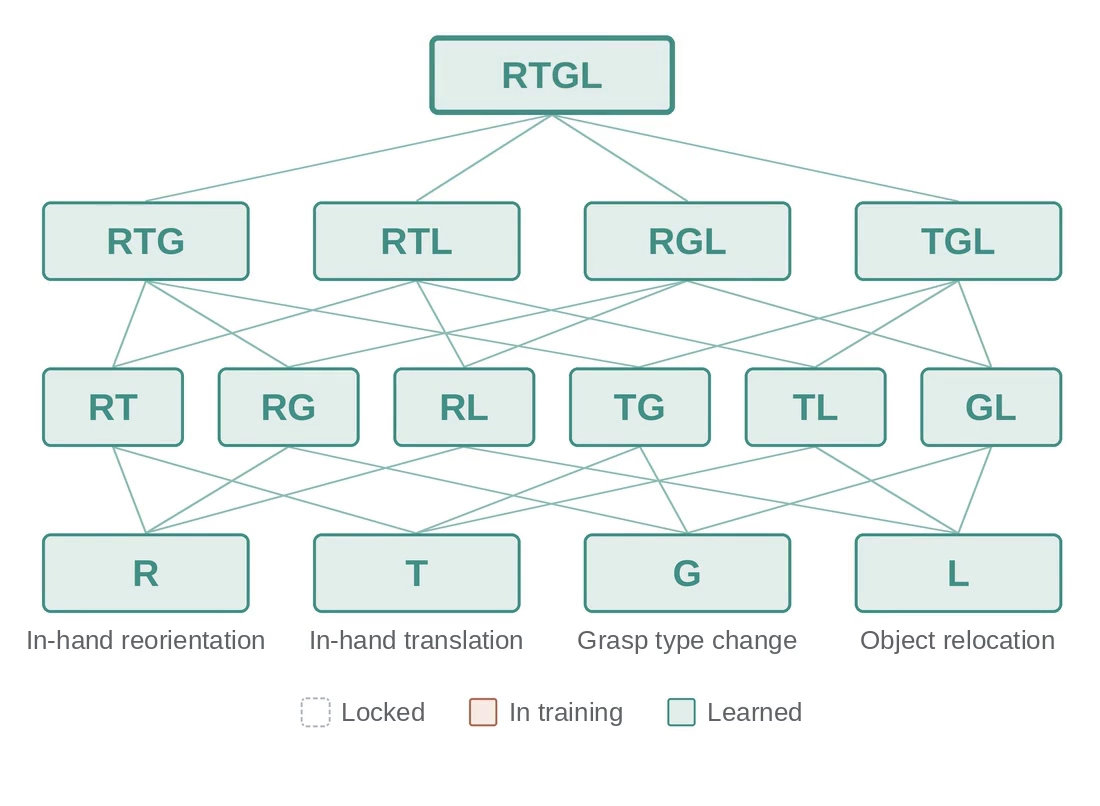
RTGL: all four capabilities Prerequisites: RTG, RTL, RGL, TGL
Task-wise annealed kernel reward
Narrows individually for each task as the policy improves, shifting from long-distance guidance to short-distance precision
Dashed: the kernel at the width below which a task counts as learned.
Nonlinear observation encoding
Sensitive to small goal errors, stable for large ones
Live demo
Play it live in your browser
Try random, selected, or manually specified goals!
Results
Different target grasps, distinct motions
Both rows start from the same initial grasp (left) and move the object to the same world pose; only the target grasp differs. Top: L. Bottom: GL (screwdriver), RTL (hammer).
Goals in a row: long-horizon manipulation
Reaching different goals one after another, a single policy performs long-horizon manipulation.
Unseen everyday objects with different hands
The same framework also trains a policy for the Sharpa Wave hand, without hand-specific tuning.
Object sizes outside the training range
Training range: long axis 10–32 cm, short axes 3–5 cm